Vancouver Marketing Consultant

Intersection Consulting

Intersection Marketing Blog

Digital Marketing Strategy, Implementation and Education


Mark Smiciklas

Subscribe via RSS
Comments RSS

Subscribe via Email

View my profile on LinkedIn

Find Us on Facebook
Free E-book

Categories

Search

Archives

Links


Some Differences Between B2B & B2C Marketing

July 20th, 2010

the difference between b2b and b2c marketing

Although strategic and tactical differences exist between B2B and B2C marketing, I think it’s important to remember that, in the end, people buy from people. Whether it’s in-store, online or at the head office, the people connecting with your customers make the difference – things like trust, service and integrity are universal and transcend every marketing sector.

Check out the inspiration for this visual at the Social CMO Blog: B2C vs B2B Marketing: Do the Differences Really Matter?

I’m sure I have missed other key differences – What are some that you think are important?

Back to Main Blog

5 Pillars of Marketing Success

August 19th, 2009

5 marketing success factors

This visual was inspired by Seth Godin. Check out The Five Pillars of Success post.

BACK TO MAIN BLOG

The New Marketing Strategy

August 10th, 2009

new social media marketing strategy

  1. Develop strategies based on the dynamics of online search, content marketing (brand journalism) and social media
  2. Create great content that helps answer your target audience’s questions and solve their problems
  3. Publish content on the web and across social media channels
  4. Promote content using search engine optimization, permission based e-marketing and social media
  5. Manage, maintain, review, update and archive content on an ongoing basis
  6. Collect, measure and analyze marketing data to assess engagement, conversion rates, leads and sales

BACK TO MAIN BLOG

Marketing E.Q.

May 17th, 2009

——————————————————————————————————————————–

the balance between marketing iq and eq

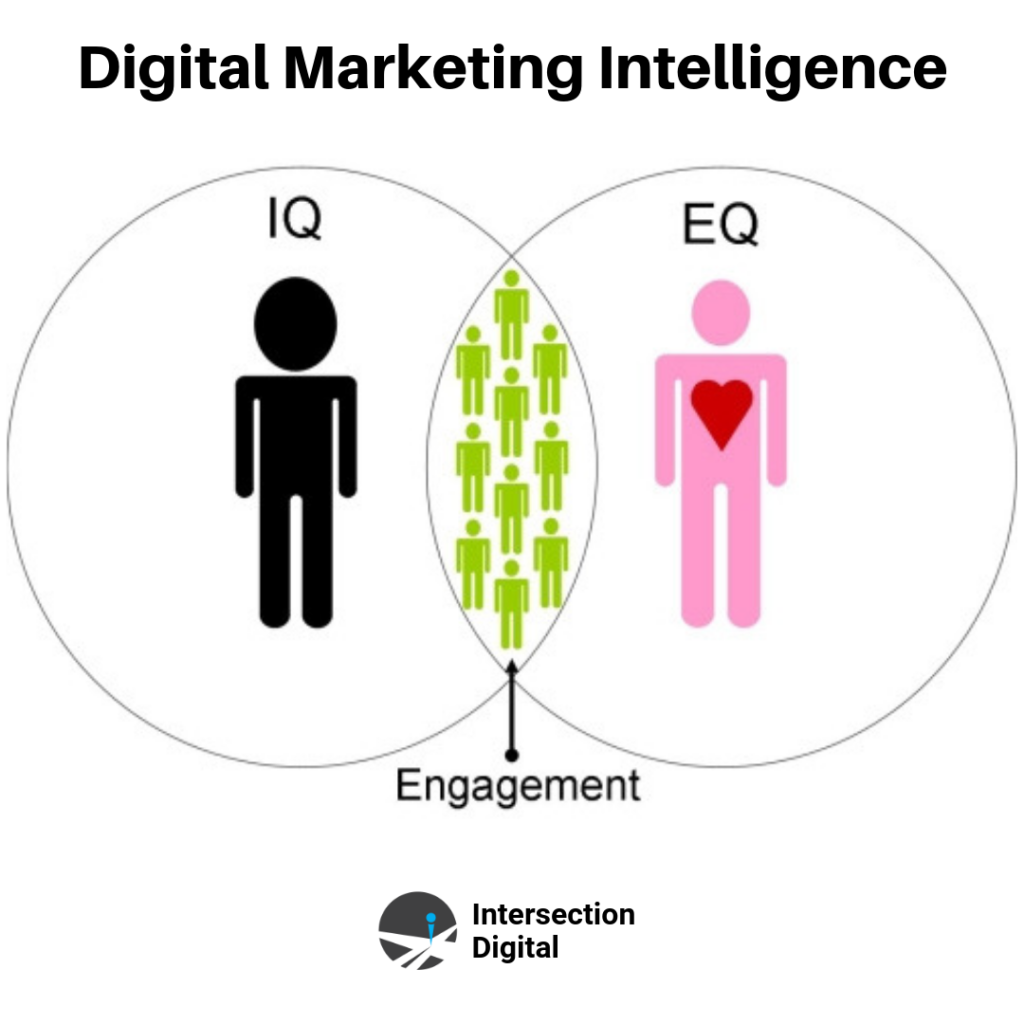
Is marketing EQ becoming more important than IQ? If building a successful brand or simply selling your “stuff” depends on creating an emotional connection with your target audience, is your level of emotional intelligence as a marketer becoming as important as your ability to implement marketing tactics?

As social media and online marketing continue to provide infinite access to the marketplace, will your success be based more on learning how to use the tools or understanding the emotional needs of the people you are communicating with?

Changing Skill Set

Social media and search technology has changed the way businesses communicate with their tribes. New marketing skills will likely need to emerge and evolve in order to keep pace and increase the odds of success.

Louise Robertson, owner of Bright Business Concepts, a marketing communication agency in Guildford, UK, feels that the required skill set for marketers is changing rapidly.

“Building a successful brand depends on the ability to create an emotional connection with a target audience and the ability to message these groups in an engaging manner,” says Robertson. “Success is not only based on learning to use the tools but understanding the emotional needs defined by target audiences.”

Okke Amerongen, Owner of Okke Internet, a web consultancy in Utrecht, Netherlands believes the importance of emotional intelligence is highly underrated by marketers. He theorizes that the dynamics of traditional marketing create a Jeckell and Hyde complex amongst some marketers.

“Most marketeers actually have a high EQ when you meet them outside of work,” says Amerongen. “Once they take on their professional role as company marketers, most of them will think of ways to talk TO people and not WITH people.”

On the other end of the spectrum, Erica Friedman, President of Yuricon LLC, a publisher based in New York City, validates emotional connectivity but leans towards marketing IQ as being more important.

“Unless the emotional connection to a brand can be converted into action for a brand, emotion is pretty meaningless,” says Friedman. “I can say I ‘like’ or ‘love’ a brand, but unless there is some action attached to it, my support is empty – If marketers want to understand emotional equity, they need to understand how to harness that emotional energy…Just becoming a fan of a brand isn’t enough.”

Balance

Deborah Bifulco, Certified Guerrilla Marketing Coach and Owner of Bifulco Business Solutions LLC, an entrepreneur focused coaching and mentoring practice in New York City, thinks that your marketing EQ and IQ can’t really be separated. She suggests that, in order to be an effective marketer, businesses need to understand what drives people to buying decisions – and that implies some level of EQ.

“Granted, there are plenty of ‘functional’ marketers who are stuck on the facts, figures, mechanics, and metrics of marketing,” says Bifulco. “But, when you look at truly successful campaigns, more often than not, you will find that they have engaged us emotionally on some level.”

The New Frontier

Creating an emotional bond with the consumer is a fundamental in advertising – but has social media, and the possibility of engaging in real time micro-interactions, changed the relationship between marketing IQ and EQ? If so, how?

Martin Smith, Chief Technology Officer at TruEffect, a relationship advertising firm based in Denver, Colorado, feels that advertisers already understand the importance of an emotional connection at the mass market level – but that the need to balance EQ and IQ is becoming more visible when delving into the micro-marketing.

“Brand building in traditional media was/is all about EQ creating the emotional connection of the product to the consumers that, on a mass basis, moved the most share in aggregate,” says Smith. “In focus groups consumers relayed the emotion of how their soap powder was like a ‘white knight’ or other powerful sentiment of their association to the personality of the product.”

However, when it comes to social media, the playing field has totally changed. The single mass market has turned into multiple micro-groups, each with different needs. This highlights the importance of both tactical knowledge and emotional intelligence.

“In a market where we measure share, intent, action and need at a single user level, we are now able to see the balance more clearly,” says Smith. “But more importantly, we can take action on smaller groups – This creates new tension in the yin and yang of EQ/IQ. Instead of single position we can now move to micro-groups of multiple millions.”

In closing, Smith goes on to say that marketing in the social media era is not so much about increasing EQ over IQ or vise verse, but rather, understanding the difference and importance of both with the aim creating an effective combination.

“Now it is about aligning the optimal message (to micro-segmented audiences) to key drivers of engagement that combine EQ & IQ,” says Smith. “The traditional drivers of response, audience, timing, offer, creative, etc. are now within the web context – So when you work both sides of it, that is when you truly see results that deliver on the promise. We now have a different challenge of making ourselves relevant and emotionally connected with audiences of one in real time . . .but then that is why we built what we’ve built.”

BACK TO MAIN BLOG

Word of Mouth Marketing

April 1st, 2009

——————————————————————————————————————————-

word of mouth marketing

Word of Mouth (WOM) is enigmatic – fairly straightforward and simple to understand yet elusive and difficult to engage, spread and sustain.

Here is are a few ideas/elements that make up word of mouth marketing (I’m sure I’m just scratching the surface with this post so please feel free to add thoughts and ideas to the list by posting a comment):

Viral Capacity

  • WOM + Social Media + Global Connectivity + Inexpensive Publishing Tools =Viral Capacity

Consumer Empowerment

  • Technology has enabled today’s consumers to voice their opinions and experiences about issues, products/services or brands.
  • As a business owner, it’s important to understand the power of WOM
  • Embracing an empathetic approach during individual interactions and across all marketing touchpoints can ignite WOM
  • Think about your brand experiences as a consumer – who would you talk to about your product/service and what would you say?

Positive Interactions

  • WOM is fueled by positive interactions across all your touchpoints (the places where stakeholders come in contact with your brand i.e. website, tradeshow, retail store, customer service desk, etc.)
  • Macro: Experiences that stem from organizational elements i.e. company policies, quality standards, etc.
  • Micro: Experiences that are impacted by individual interactions i.e. the accommodating customer service rep, the friendly deliver driver.
  • The type of macro/micro interactions stakeholders have with your product, service or company will have a big impact on whether WOM occurs…and whether it will be positive or negative.

Lead Generation

  • Delivering on your brand promises builds loyalty and trust
  • Loyalty and trust leads to WOM
  • WOM translates into referrals and sales leads
  • Referrals from WOM are cool because they include some inherent trust in your brand passed on from influencers

BACK TO MAIN BLOG

Crap + SEO = Optimized Crap

March 30th, 2009

——————————————————————————————————————————–

“Performing search engine optimization on a crap-filled site just makes it slightly less crappy.” (David Meerman Scott)

Source: SEO and Your Crap Filled Site (Web Ink Now)

BACK TO MAIN BLOG

The Marketplace

March 12th, 2009

———————————————————————————————————————————

David Meerman Scott reminds us that the market is the outside world and not your cubicle or office. Who are you marketing to?

BACK TO MAIN BLOG

Visual Marketing: Interaction + Sales

March 8th, 2009

—————————————————————————————————————————–

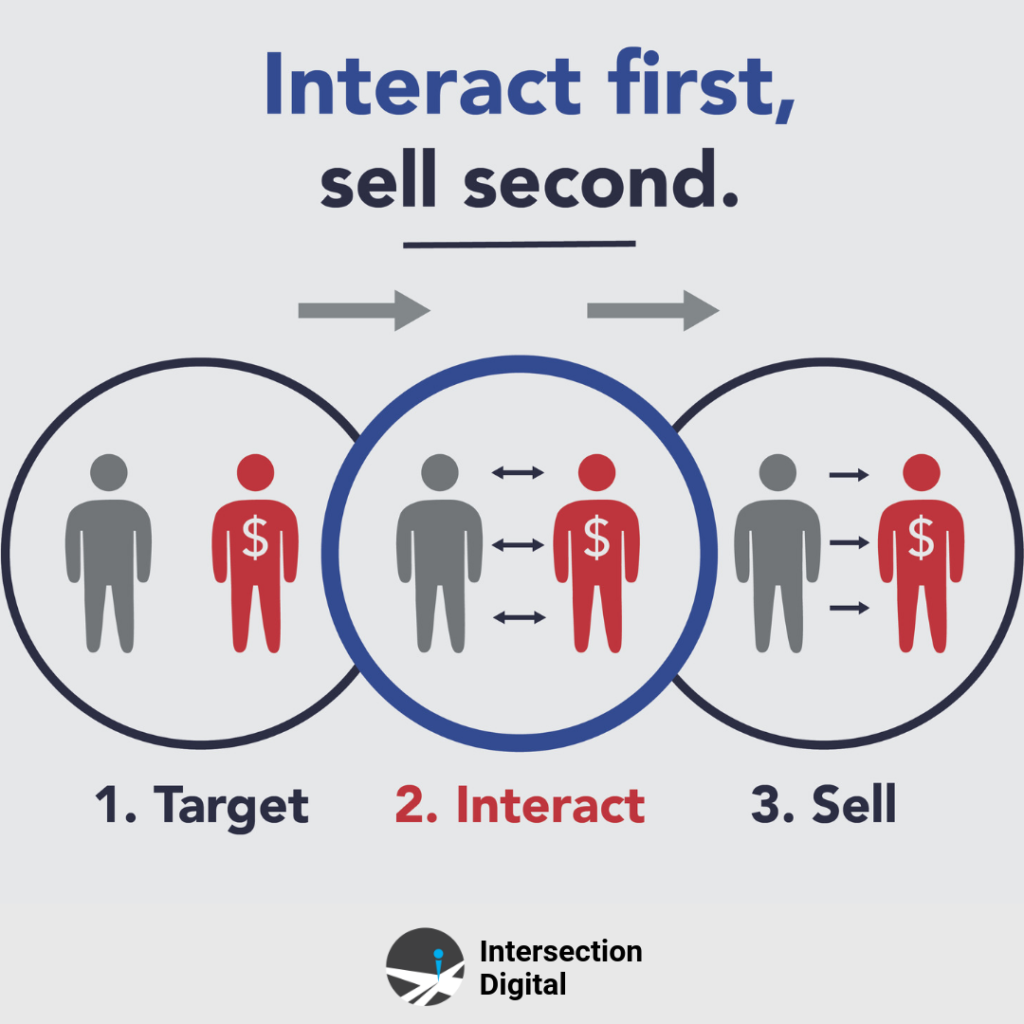
This visual was inspired by a great story about Seth Godin and his interaction with a panhandler in New York.

BACK TO MAIN BLOG

Marketing Reach

March 1st, 2009

——————————————————————————————————————————-

Drew McLellan asks “Are you where your customers are looking?“. His post references online marketing and the SEM Gap that exists, but it also made me question the overall marketing reach of small business. Does your business have a marketing presence at all customer points of contact? How well do you engage with customers at each of these touch points?

Two Types of Marketing Reach

Physical Reach – Is it easy for your target market to buy from you at a specific touch point?

Example: Your target market buys books online; your website doesn’t offer e-commerce (Negative Physical Reach).

Emotional Reach – How well do you engage with your target market at a specific touch point?

Example: Your hardware store target market is do-it-yourselfers; your store is always short staffed, customers have a hard time getting their questions answered (Negative Emotional Reach).

Examples of +/- Marketing Reach

  • Touch Point: In-Store
    • Your store is not located where your target market likes to shop (-)(Physical)
    • Your store always has friendly, helpful staff (+)(Emotional)
  • Touch Point: Telephone
    • Your phone system is fully automated with no live attendants (-)(Physical/Emotional)
    • You have a live person pick up every call and they are qualified to help solve your customers problems (+)(Physical/Emotional)
  • Touch Point: Search Engines/Website
    • Your website is poorly optimized and you don’t engage in search engine marketing (-)(Physical)
    • Your website can be found online but your navigation/usability are poor (-)(Emotional)
    • Your website offers an easy to find and easy to use quote tool that helps prospects find out the price of your product/service (+)(Physical/Emotional)

Make a list of all your small business’ marketing touch points. Are you physically and emotionally present at each point of contact? What can you do to turn negative physical/emotional reach into positives?

BACK TO MAIN BLOG

Visual Marketing – Why Won’t Customers Buy From You?

February 22nd, 2009

———————————————————————————————————————————-

BACK TO MAIN BLOG

« Previous Entries  

Intersection Consulting is run by
Vancouver Marketing Consultant
Mark Smiciklas, MBA

604-809-0296
© Copyright 2008 - 2010 Intersection Consulting and Learning Ltd. All rights reserved.
Site by Vancouver Web Designer J. Klassen.