|
May 23rd, 2010

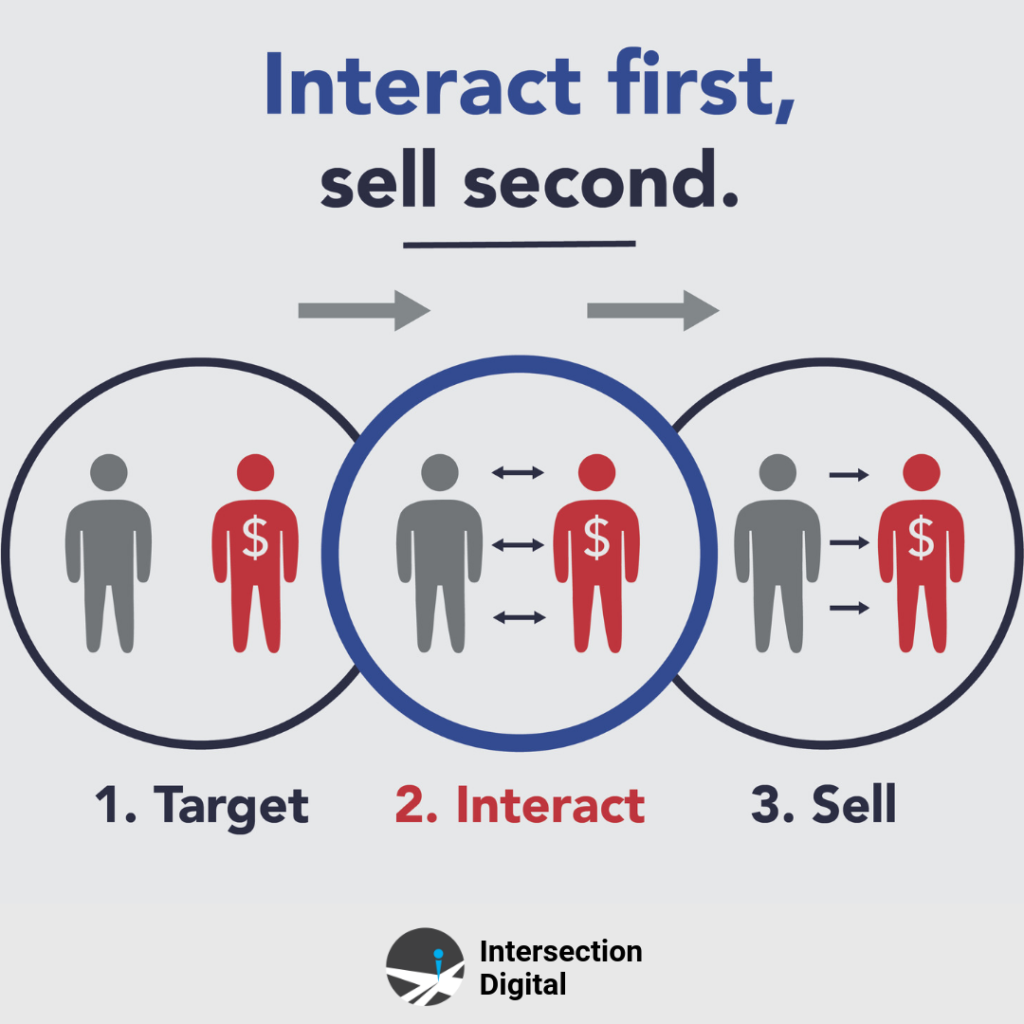
This visual was inspired by a great post written by Teresa Basich over the Radian 6 Blog: Customer Service is the New Marketing
Social media has the power to magnify every customer experience. Whether it’s in-store, on the phone or online, each individual customer service interaction now becomes a marketing opportunity.
Social media has spread the “service” role across the organization – Procurement, Distribution, HR, Sales, Operations, Management, Ownership - every employee in every department is now charged with the role of nurturing customer relationships.
Back to Main Blog
Posted in Customer Service, social media | 2 Comments »
July 7th, 2009
—————————————————————————————————————————–

While researching a service online recently, I submitted contact forms to a couple of well known local businesses – I was frustrated by the fact that it took four days for one of the firms to contact me…and I’ve yet to hear from the other one.
More and more people are using online search to find products/services to meet their needs. As communication becomes more “instant” with the growth of tools like Twitter, are consumers expectations with respect to service delivery becoming more demanding?
Are some organizations failing to adjust to the new speed of communication? If so, what can companies do to bridge the gap between consumer expectation and service delivery?
Service Expectations
One prevailing notion about the web is that it has made consumers more impatient. Based on my experience, this could be true – I was expecting a response from my online inquiry within 24 hours. However, if this is the online service dynamic, shouldn’t businesses be prepared to deliver on the implied expectation?
William Howard, Owner of William Howard Marketing and Marketing Communications in Charlotte, North Carolina, has had similar online service experiences, often leaving him feeling frustrated and disappointed in the company he’s trying to connect with.
“In the fast paced technological environment we are in, people want a response to their inquiry and they want it within a reasonable time frame,” says Howard. “One of the worst things a company or individual can do is not respond to inquiries. If you solicit an inquiry and then ignore it, or take too long to acknowledge it, you are sending a powerful message – You just told (your customer) they are not important.”
Brent Vinthers, a Client Services Representative at Target Internet Development Corporation in St. Catharines Ontario, has experienced repeated service problems and has a hard time understanding how companies doing business online can be successful when they don’t get back to people in a reasonable amount of time.
“The maximum about of time to provide a good customer experience would be 24 hours,” say Vinthers. “Although…this is changing with twitter and online chat. I recently inquired about a Microsoft product and was able to chat with a rep online within 30 seconds – I was impressed to say the least”
Jennifer Nemes, a Marketing & Sales Associate at CB Apparel in Spokane Washington, feels it’s important to acknowledge customer requests and make a connection as soon as possible.
“We receive customer comments or questions daily and funnel them through a single customer service agent who receives them in email,” states Nemes. “Customer service email is checked throughout the day and responses are expected same day, 24hrs at the longest.”
Causes
Online service gaps seem to develop as a result of:
- systems issues
- unclear service delivery expectations
- insufficient training
- departmental/inter-departmental communication (for larger organizations)
- time management (for entrepreneurs/small businesses)
“The problem begins at the top,” says Howard. “Companies who put inquiry forms on their websites often fail to put a system in place to cover all inquiries. Those who respond need to be trained and motivated to respond within a specified period of time.”
Howard goes on to say that developing online touch points with the expectation that they will become self managed is mistake that can prove costly.
“Merely having a form on the web and advising customer service to respond to inquiries is not enough. Each and every solicitation for an inquiry must be backed by a solid plan of action on the part of the company and be monitored for effectiveness.”
Ashok Neelakanta, COO at i-Vista Digital Solutions Ltd in Bangalore India, believes that the fundamental problem (for mid-large organizations) is related to a culture of operational silos.
“The person who sets up various online mechanisms might not be responsible for addressing queries and, hence, causes the gap,” says Neelakanta. “In addition, marketers are chasing trends and setting up interfaces in every available online venue…perhaps not realizing the bandwidth required to service consumer needs (through multiple channels).”
Bridging the Service Gap
Gregg Van Voorhis, an Operations Manager at the Bureau of National Affairs Inc in Washington DC, runs a call centre that recently migrated from a customer service email system to web forms because clients complained of gaps in service. Gregg’s team had issues tracking who picked up each e-mail from a group mailbox, who responded and when. As a result it was difficult to improve customer satisfaction.
“Before jumping to web forms I had one key requirement,” said Van Voorhis. “Although it was easy to merely direct a web form to an e-mail address, the key factor was to instead direct it to a database with work flow
capabilities. Now the following takes place:
- The customers receives an immediate “Thank You!” e-mail to let them know their request was received
- The response also includes estimated response time, our hours of operation and a phone number in case they prefer to call
- The request is categorized based on where they found the form, what form they chose and various responses to fields on the form. It is then prioritized
- Based on the priority a notice is automatically sent to at least one staff member’s and at least one manager’s personal e-mail
- The inquiry is date/time stamped
- Each category has a threshold for responses. If the customer has not received a response by the threshold, the staff and manager(s) receives another e-mail.”
The technology to implement an effective online customer service system exists. Whether it’s a full scale enterprise solution or a simple system using PDAs – the challenge lies in understanding the service expectations of the online consumer and making the commitment to deliver on your service promise.
“The impact on customer satisfaction is immediate,” says Van Voorhis.
Image: http://www.flickr.com/photos/limaoscarjuliet/3305886294/
BACK TO BLOG HOME
Posted in Customer Service, Technology, Website Strategy | 2 Comments »
November 26th, 2008
—————————————————————————————————————————-

By Mark Smiciklas
A recent news story about iPod Loyalists places the iconic Apple brand in the middle of a discussion about the spread of “iCrime”. What happens to a brand when its influence is so great that it becomes the central focus of negative societal behaviour? Do companies have a social responsibility to try to mitigate some of the negative behavior that may be associated with their brands? Can negative brand evangelism result in long term damage to a brand or do passionate consumers simply ignore negative brand stories?
Brand Evangelism
Brand Evangelism is deemed the top rung of the brand loyalty ladder – it occurs when passionate consumers of products or services become so enthralled with a brand that they willingly engage in word of mouth marketing on behalf of an organization. These consumers have such a core belief in the brand and what it stands for that they try to convince their network to embrace its purchase or use.
In my opinion, Negative Brand Evangelism occurs when a brand becomes such a status symbol that it inadvertently promotes negative social behavior.
Social Brand Responsibility
Do companies have a responsibility to try to mitigate some of the negative behavior associated with their brands? In the case of the iPod, Apple surely can’t take responsibility for the actions of every criminal that targets their consumers – but they could try to reduce the their consumers’ exposure to risk by embedding some features into iPods that might make them less attractive to steal and re-sell. Wouldn’t this add even more value to the brand?
Tony Barr, Marketing Strategist and Founder of Brand Reasonality, believes that there are brand benefits to addressing user risk:
“As a parent of two teenagers who own iPods, I find your question particularly thought-provoking. The brewing industry’s advocacy of “responsible consumption” may be useful analog. Certainly, in some circumstances, companies have a legal duty to warn against certain types of conduct – known or potential – associated with their products or services. I suppose that one might posit, as a general principle, that companies who claim social responsibility as one of their brand pillars have an implicit duty to act reasonably against legitimate risk to their brand audience – and, derivatively, against risks to their brand value. In the case of the iPod, in particular, we would do well to remember that parents – while they might not be brand adopters per se – play an important gate-keeping role in purchase and usage behaviors. I suspect, again, as a parent myself, that reaction of the gatekeeper class to such social responsibility would be generally favourable. Moreover, I suspect – or, minimally, hope – that the reaction of the brand adopters would be similarly favourable.”
Peter Mojica, VP of Product Strategy at AXS-One Inc in Charlotte North Carolina, feels that “corporate brands have a responsibility to build products that meet consumer demand, and can be sold at a profit and build shareholder value.” During this business process, he feels that companies should act responsibly but cannot be expected to “take responsibility for miscreant’s societal ills.”
Peter goes on to draw parallels between Apple and Nike:
“I can recall a lot of news stories around Nike and the desire for Air Jordan sneakers which led to many a crime wave. It’s hard to peg Nike for some diabolical plan to create a product that would generate a desire for one fellow to knock another fellow senseless and take his sneakers off his feet! Meanwhile, behind the scenes, Nike and the Jordan brand gave away millions to charitable foundations.”
Public Relations in the Face of Negative Brand Evangelism
What should companies do when faced with negative brand evangelism? In the case of “iCrimes”, there has been some press (associated with police agencies) suggesting that consumers should swap out the traditional white iPod ear buds less obvious black ones…but I’m not sure if there has ever been a formal statement regarding this issue from Apple.
Nathan King, Art Director at Austin and Williams in New York City, suggests that the lack of any “very public announcements from Apple” is an indication that they are not concerned about iCrimes having a negative effect on the brand. “They didn’t try to change their product to react to the negative behavior. The masses of people wearing the white ear buds is a constant, visual reminder that people are using iPods – why would a company want to get rid of that?”
Brent Skinner, President & CEO at STETrevisions and a Web 2.0 public relations and marketing expert, suggests there really only two ways for companies to address Negative Brand Evangelism:
- Ignore it completely – the goal being to starve any attention negative brand evangelism might create
- Face it head on with the logic that open communication breeds truth – If the brand is undeserving of negative press, the issue will burn out more quickly with a formal series of rebuttals
Brent goes on to say:
“I know folks in communications positions at very large, high-profile companies who take option one as a matter of course and I know others who embrace item two as dogma. However, in my opinion, the approach partially depends on the strength of your brand in the first place, and your assessment of your own brand’s strength had better be accurate. For instance, GM seems to have largely ignored the groundswell of viral anti-GM sentiment that followed the release “Who Killed the Electric Car?” I think the company overestimated its brand’s strength, and now may be paying the ultimate price.”
Andrea Hill, Director of Social Media and Interactive Technology at Worldways Social Marketing in Denver, feels that it’s important to understand how your brand is perceived and to be active in managing your brand reputation. “I believe it’s far better to recognize a problem than to ignore it, and appear obtuse and out-of-touch.”
In the end, I think if a product or service has enough brand evangeslists it can likely avoid any long term erosion due to negative behaviour association. Mark Sofman, an experienced business communicator and manager of outreach, advocacy and issues management programs in Washington DC, feels that brand evangelists help protect a brand value in face of negative evangelism. He thinks that passionate consumers can be “harnessed to good purpose…not just to studiously ignore bad news, but to be motivated to critique negative stories.”
Long Term Brand Damage?
Can negative brand evangelism cause long term damage or do passionate consumers simply ignore negative brand stories? Logic might suggest that negative evangelism should erode brand value to some degree. However, using iPod as an example, I really wonder whether the brand will suffer when I read stories about kids risking getting stabbed rather than giving up their iPods…that kind of loyalty is scary!
Peter Mojica believes in the unfortunate truth that any kind of attention is better than no attention at all and feels that negative brand evangelism may actually fuel sales increases in certain situations. In the case of iPod, he doesn’t see a huge impact on the brand because the negative incidents taking place likely represent a very small percentage of the overall brand experience, which is overwhelmingly positive.
Brandon Mendelson, Editor in Chief at GSO Press in Albany New York, doesn’t think strong brands suffer long term damage:
“Look at the WWE, it took a real hard hit after the Chris Benoit incident, but over the long term their stock went up and the audience came back to watching their programming. The passionate consumers will look at the negative stories, but (after a short period of time) it won’t weigh too much into the purchasing process.”
Walter Jones, Director of Morris News Service in Atlanta GA, feels that most media is fair is dishing out brand criticism and that consumers are smart enough to recognize whether or not brands are victims of circumstance. He feels that the level of brand damage has a lot to do with how companies market their products:
“If a company deliberately sought a gangster image, say, then a news story about crime associated with the product would inevitably mention the possiblity that the company’s marketing may have set the tone for those crimes and the company would be fair game for criticism in such a case. On the other hand, I think reporters can recognize when a company is a kind of secondary victim. For example, when gangs adopted the jerseys of professional sports teams because of their colors or no-nonsense mascots rather than their success on the playing field, no one accused those teams of encouraging gang activity.”
I find this issue very interesting and been having trouble establishing a firm opinion:
- As an “iPod Parent” I don’t expect Apple to help mitigate my kids risk…I see this as my responsibility as a parent. But the issue is real – kids are getting rolled over for their iPods. Luckily, my son has taken matters into his own hands and has established his own policy of not taking his iPod to school and has traded in his white ear buds for innocuous black ones.
- As a socially responsible citizen, I have to say that I am troubled by what I perceive to be indifference on the part of Apple. A trial that began recently crystallizes the point for me – A youth is charged in the stabbing death of 22-year-old Michael Oatway, an Ottawa man allegedly killed for his girlfriend’s iPod on a city bus. It’s ridiculous to even suggest that Apple has any control over this type of behaviour or is culpable in any way, but, as an iconic brand, wouldn’t these type of stories prompt some sort or response? The kid died because he was wearing an iPod…Is Apple not disturbed by this?
- As a marketer and business person, I appreciate and understand the stance that a company’s main (and some would say only) goal is to make a profit – and it can’t be held accountable for negative brand evangelism, particularly if their product or service is safe to use and does not pose a direct risk to consumers.
 Michael Oatway was 22 years old when he was fatally stabbed over the iPod he had borrowed from his girlfriend (Image: Globe and Mail)
What do you think? Please submit a comment
(To enter comments from the main blog page, please click the article title and scroll down to the bottom of the post)
Posted in Branding, Customer Service, HR, Leadership, Marketing, Organizational Culture, Public Relations, Social Responsibility, Strategy, Website Strategy | 8 Comments »
October 19th, 2008
————————————————————————————–

Sales are important to every business because revenue is the fuel that drives growth. But in the case of small businesses, there seems to be a greater sense of urgency when it comes to converting every individual sales opportunity. Due to the real or perceived pressure of closing a sale, small businesses sometimes fail to recognize when the grip of inertia has taken hold of a prospect. What is inertia and how does it affect your small business? Are there any strategies to deal with “Prospect Inertia”?
Prospect Inertia
Inertia is defined as “a feeling of unwillingness to do anything.” Blinded by the need to make the sale, small businesses often mistake inertia for a prospect needing more time, information, etc. to make a decision. In a recent blog post, Seth Godin discusses indecision and inertia from a marketing perspective:
“We think that people are undecided because they don’t know enough
about our features or our competitors, or because they don’t have
enough money or they are waiting to hear from their friends. In fact,
most of the time, they’re undecided because they are afraid of
deciding. No is scary and yes is scary. The reason that so many people don’t vote is the same as the reason
that so many people walk past your store every day or click past your
site every day. Because inertia is compelling. Inertia absolves them of
responsibility.”
The Effects of Inertia
Prospect Inertia can affect your small business in two ways:
- Inertia wastes one of your most important assets – time. Time spent on Inertia Type Prospects takes away from precious moments you could spend engaging your interested target audience; helping move Action Type Prospects towards a decision; etc.
- Inertia limits productive feedback. Salespeople don’t understand where they are in the sales process; inertia prospects starve your small business of information that can help improve your product/service, help you gauge where your pricing is in the marketplace, help you build your brand, etc. “A no is better than a maybe, any day” says Seth Godin. “At least you can learn from a no.”
Inertia Strategies
It is impossible to prevent inertia from taking hold of some of the prospects in your pipeline – but there are a few strategies that may assist in breaking down barriers and helping some of your target audience reach a decision. These strategies include:
- Published pricing. In my opinion, dealing with pricing during the early stages of the sales process is a great filter. The earlier your prospects understand pricing the earlier they will decide whether it fits their budget – they will either move on (which is good because it doesn’t waste your time) or the will continue along in the sales process (which is also good because now you’ve eliminated a major objection).
- Make it easy to test your product or service. The easier it is for prospects to try your product or service the quicker they can decide whether it solves their problem. It’s great if you can offer things like free trials, have online demos available, etc.
- Make it easy for prospects to get a number of their questions answered (before they have to call you). Whatever business you are in, take a look at the problems that plague your target audience and take the time to publish how your product/service solves those problems. One example could be a great features/benefits or FAQ section on your website.
When inertia takes grip of your small business prospects, it’s probably best to make the difficult decision to move on. Focusing your energy on the share of your target audience that is willing to make a decision (yes or no) will always prove to be a better investment of your time than working with prospects that will never decide.
Posted in Customer Service, Sales | No Comments »
August 24th, 2008
Great customer service is one of of the pillars that supports a successful small business. Offering great service to your clients, prospects and vendors will help establish your reputation, build trust, create brand equity and fuel growth. What are the customer "pain points" when it comes to service? How can your small business become better at delivering a great service experience?
"Pain Points"
Global customer satisfaction research carried out by Accenture found that the following service issues were the most frustrating for consumers:
- Having to repeat information to multiple customer service representatives
- The inability of agents to solve problems immediately due to lack of information or authority
- Being left on hold for extended periods of time
- Slow service – the amount of time it takes to respond to inquiries
1.0 Phone Management
In my opinion, answering the phone (as opposed to using an auto-attendent) is a great starting point when it comes to providing better customer service. In the digital age, having a live voice at the other end of the line can become become a major point of
differentiation and a big competitive advantage for your small
business.
2.0 Empowerment
Another great way to improve your customer service is to empower your staff by:
- Providing your employees with as much information about your business as possible
- Training your team to be able to handle a wide variety of inquiries
- Entrusting staff with decision making powers that enable the solution of problems "on the spot"
This formula was used by Southwest to become a service leader in the airline industry. An excerpt from "Nuts – Southwest Airlines' Crazy recipe for Business and Personal Success" by Kevin and Jackie Freiberg illustrates the point:
"Access to critical information grants customer-contact people the knowledge and understanding they need to take ownership and responsibility for doing the right thing. For example, a Southwest customer service agent who understands how the company makes its money, where profits come from and what they mean to the company, is in a better position to serve a customer who is making a special request. Customers who deal with Southwest employees rarely get the runaround. Instead they are likely to deal with a person who is well informed, makes sound decisions and has a flexible, creative problem solving approach. their knowledge of the company gives the people of Southwest Airlines the confidence and power to truly make a difference in the lives of their customers."
2.5 Technology
Why the 0.5 you may ask? Well, technology is a double edged sword – it can hurt your small business' customer service efforts just as much as it can help. The Accenture research report had this to say about the effects of technology on the provision of customer service:
"For the most part,
consumers are unimpressed with the role technology plays in service. In
fact, 51 percent of respondents worldwide do not believe that increased
use of technology in service has improved the level of customer
service. Consequently, it is not surprising to find so few consumers
report being satisfied with technology-centric service channels such as
automated telephone and online chat."
Be sure to take a balanced approach when it comes to using technology to provide customer service and ask yourself the question: Is this technology going to help solve a customer service pain point?
One of my favourite uses of technology addresses the slow service issue. Customers or prospects looking for service/information through a website can get pretty frustrated by the amount of time it takes to get a response. Solution: map your website service touch point i.e. "info@yourcompany.com", "support@yourcompany.com", etc to the specific email addresses of your service team and have those email accounts linked to BlackBerrys. This will give
you the ability to engage in a conversation with a customer instantly and address a major service pain point.
For an example of technology that might create a pain point as opposed to alleviating one, check out a recent post by David Meerman Scott – he provides a good personal service story of how technology can miss the mark.
Posted in Customer Service | No Comments »
April 21st, 2008
In my experience, sales and customer service roles within most small to mid-sized organizations tend to be defined as follows…
- Pre-Sale: The salesperson or sales team interacts with potential clients during the business development process. Communication occurs through prospecting, proposal writing, sales presentations and negotiation. Sales team objective: revenue generation.
- Post-Sale: A Customer Service Representative (CSR) or Client Services team assumes the role of customer relationship management. Communication occurs through training, help desk support, etc. Client service team objective: customer service.
This business model is standard in many industries and has proven to be a successful way to manage the sales and customer service functions – but is it the best way to maximize revenue for your small business?
In a recent strategy session, I had the opportunity to brainstorm ways to generate incremental revenue with the CEO of a small software company. We discussed how the customer service/client relationship may be well suited to creating new revenue streams. One idea that stood out was the perception your clients have towards sales vs. customer service.
Perception is Reality
Regardless of how honest, professional and customer centric your sales team is, your clients may still be applying mental models or stereotypes when they communicate with salespeople i.e. Is the salesperson really interested in my needs or are they try to take advantage of me? Do I really need that feature/product/service or is the salesperson just trying to sell me something? Is that really a fair price? Clients tend to have their "guard up" when dealing with sales.
On the other hand, the perception with client services is probably different because of the nature of the relationship. From the onset, the customer service/client relationship is based on providing assistance, as opposed to "selling". For example, if your customer service representative discusses the benefits of a new product/service with a client, that client is likely more engaged because the intention of the CSR is to help them provide a solution rather than selling them a product/service.
Leveraging the relationships that have been created by your customer service department will create new sales opportunities for your organization. Getting your client service team to begin presenting beneficial solutions to customers will help develop incremental revenue and help fuel the growth of your small business.
Posted in Customer Service, Sales, Strategy | No Comments »
April 11th, 2008
How well does your organization answer the phone? It may seem like an odd question, but it could be very relevant to the success of your small business.
I was speaking to a prospective client recently – after our conversation I asked how he found my business i.e. online, word of mouth, etc. He had discovered my business though a Google ad…but had called the company listed above me in the rankings – they didn’t pick up the phone so he proceeded to contact me. That small business lost a great opportunity to start a conversation about their brand with a prospect that was interested in their service.
It’s not realistic for customers to get a live voice at the other end of the line every time they call. In fact, in the voice mail era, I would suggest that most people expect the opposite – an endless loop of auto attendants. As a small business it might be difficult to offer personal accessibility at all times. There will be gaps, but it’s critical not to underestimate the value of personal communication.
In his book "What Were They Thinking – Unconventional Wisdom About Management", Jeffrey Pfeffer notes a study stating 94% of the people surveyed were frustrated to hear a recording instead of a human voice when calling a company. I am aware of a few organizations that make a point of trying to answer every call – the strategy has become a competitive advantage, with many clients stating "the ability to get through to a live person" as one of the reasons for choosing their product or service.
Technology is awesome, and there are so many great tools available to help small business owners become more efficient in the way they communicate with their clients i.e. BlackBerry, VOIP, etc. However, I suggest that you avoid the urge to over-automate your telecommunications. A simple thing like answering the phone could become a point of differentiation and develop into a competitive advantage for your small business.
Posted in Communication, Customer Service | No Comments »
March 24th, 2008
By Mark Smiciklas
This past weekend I received a phone call while I was traveling on business. It was WestJet letting me know that I had a few more hours in Toronto because of a re-scheduled flight, and that there was no need for me to rush and show up at the airport early.
Although it was a simple gesture, I was seriously impressed…I’m not sure how many other airlines would have taken the time to provide this kind of service. A simple phone call solidified my belief in the brand and made me feel good to be a part of the WestJet Tribe. The experience was so positive that I ended up relaying the story to many of my friends and colleagues.
The airline industry is likely not considered a hot bed for customer service best practices, but it is what it is – and WestJet seems to consistently exceed customer expectations when it comes to service delivery. Whether it’s perception or reality, great customer service seems to be the exception and not the rule in many business sectors, providing a great opportunity for dedicated companies to establish a competitive advantage.
What service gaps exist in your market segment? Would a phone call to one of your customers offer your small business the opportunity to provide exceptional service? Make the call and find out – you might be surprised how fast your customers spread the word.
Posted in Customer Service | No Comments »
March 14th, 2008
I am constantly amazed by the fact that some companies don’t bother to respond to website information requests…acknowledge voice mails…reply to emails, etc. It’s safe to say that being totally ignored represents the extreme end of the (bad) service spectrum and very few will argue that “indifference” is not a good customer service strategy. But what constitutes reasonable or excellent service in today’s marketplace? When I research a product/service online, I find myself getting agitated if I don’t get a reply acknowledging my interest within the same business day. Are consumers more demanding today than in the past?
Consumer Expectations
Deb Kolaras, Owner at Signet Consulting Inc. in Denver, Colorado, doesn’t think that consumer expectations have changed. In her opinion, overall service delivery has declined and is failing in many cases. “Consumers expect that they should receive good service, but are actually surprised when it happens. They WANT great service, but instead of demanding it, they simply move on – most (consumers) are just too busy so they just go elsewhere.”
Based on his experience, Rémi Chadel, a Professor of Marketing at Ecole Hôtelière de Lausanne and a Managing Partner at Chadel & Cie Strategy & Execution in Geneva, Switzerland, feels there are good reasons to believe that customers are more demanding today. Chadel lists the following as factors that have had a great influence on consumer behaviour and have contributed to making customers “more demanding than ever”:
- Globalization – Broadened consumers choice of goods and services
- Internet – Infinite choice and unparalleled ability to compare products and services
- Media – Virtually unlimited access has created an information-intensive society
- Deregulation – More choice for staple services in various markets (Automotive, Insurance, Banking and Finance)
- Progression of the economic value – Through branding, some companies are replacing service offerings with brand experiences, elevating consumer expectations
Michael Blakley, a Technical Support Manager at Ipswitch Inc., an innovative IT software development company in Augusta, Georgia, has a different view. He suggests that “customer expectations have been spreading in all directions,
higher and lower, depending on the stake the customer has in the product; how much they’ve paid and how important it is to them.” Blakley has a more pragmatic approach when assessing the value of customer service to an organization. He states that customers will complain, but questions how much those complaints really affect an organization. “If the complainers represent a good portion of your business, then they matter a lot. If they represent a tiny portion, then they
don’t matter. It all depends,” says Blakely, “Good customer service doesn’t necessarily pay for itself or drive profit and changing expectations don’t necessarily matter. There is no general trend. Every business has to assess the costs and benefits of various levels of service to its own customers, and find a level that drives profitability.”
Service On-Demand
Deb Kolaras thinks it is critical for small business to provide on the spot customer service. “Nothing makes a consumer more angry and apt to move on than feeling as though their issue is either ignored or unimportant.” In Kolaras’ opinion, there needs to be some immediacy when it comes to serving customer needs, with issues being handled in as timely a manner as possible. Otherwise, she feels that consumers will quickly begin the search to replace you as their solution provider. She says that “until businesses grasp this, they are powerless to hold onto customers.”
Service on-demand seems like a good solution when it comes to addressing the demands and expectations of the modern consumer. Rémi Chadel brings up an interesting point to consider before jumping to any conclusions with respect to the power of instant service. “My experience in marketing strategy projects shows that speed and instant service are a component of differentiation only when they trigger an emotional cue with the customer.”
John Eichenlaub, a Sales Representative at Allied Tube & Conduit in Columbus, Ohio, wonders whether it is possible or practical for many businesses to resolve all customer concerns instantaneously. He feels it’s far more important to “serve every customer quickly and professionally” and offers up the following advice when it comes to customer service:
- Make it a point to take or return every call as soon as possible. While you may not be able to resolve all concerns immediately, you should be able to:
- ensure you understand the concern
- summarize what you must accomplish internally to respond
- give your best possible estimate for resolution
- Follow through on service promises
- Make all customers feel they have your undivided attention
” Without question, customer service has allowed our brand to remain dominate in the presence of stiff competition
from sub-prime and foreign competition,” says Eichenlaub. “Markets rise and fall based on many factors. As long as I’m in the ball park, I believe my customers will pick up the phone and dial the team they trust.”
Commitment to Service
Think about how close your small business can/wants to get to delivering “on demand” service and weigh the costs vs. incremental benefits. The most important thing about service is understanding the impact it
will have on your small business in today’s business environment. Consumer expectations may or may not have changed in recent decades, but one thing has – proliferation of choice. If your small business does not meet whatever the service expectation is for your sector, product or service, consumers will be quick to seek out an alternative. Make the best commitment you can to customer service and use it as a platform to build your competitive advantage.
Contributor Links:
Deb Kolaras – http://www.bizcoachdeb.com
Rémi Chadel – http://www.chadel.ch/
Posted in Customer Service | No Comments »
January 30th, 2008
An organization I work with recently set up an Environment Fund. The premise, in a nutshell, is that clients and corporate partners have the opportunity to contribute to the fund, the company matches all donations and then selects an environmental project to support.
We wanted to make sure that the funds would be managed by a credible organization, so we contacted a notable environmental foundation to see if they would be interested in becoming our partner in the project. I submitted a fundraising proposal and eagerly awaited a reply. That was on November 27th…no answer yet.
In a previous post I suggested a way to instantly engage with your customers. In some cases your small business or non-profit may not have the resources, technology, etc to provide service that quickly.
That’s o.k. – the most important part of the service conversation is to acknowledge that you are listening. Customers like to know that they are being heard, so even if your organization can’t address the issue, question or concern right away, at least respect your customers efforts and interest by letting them know you are listening.
In my example above, a quick email or phone call acknowledging receipt of my proposal with an expected response time would have been great.
"Hi Mark – thanks for submitting a fundraising proposal. Right now, we’re really short staffed and are doing our best to process all requests. We expect to have a response back to you within 3 months. We apologize for not being able to process your fundraising proposal sooner." That took me less than a minute to write…
Take 60 seconds to tell your customers you’re listening….and then do your best to help them as fast as you can. It’s better than ignoring them and hoping they go away…because they probably will.
Posted in Customer Service | No Comments »
« Previous Entries
|